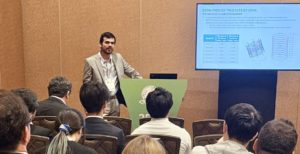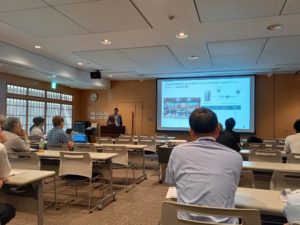

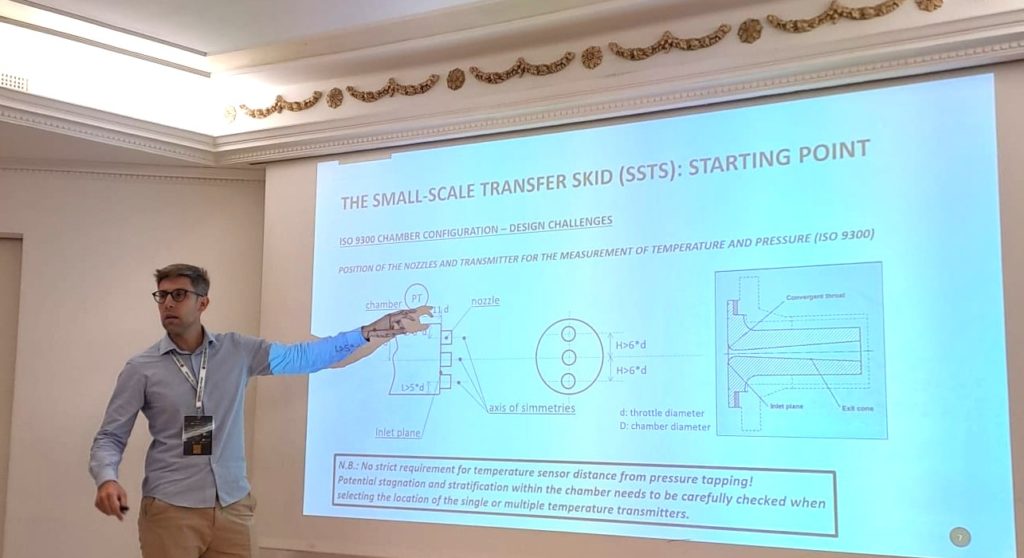
H2FlowTrace attended the European Fuel Cells and Hydrogen Conference 2026 (𝗘𝗙𝗖𝗛₂ 2026) on September 16 to review our activities to improve the traceability of hydrogen flow measurements in gas networks. Alessandro Guzzini, Assistant Professor at Alma Mater Studiorum – Università di Bologna, presented the latest progress, highlighting the development of a new small-scale transfer system and the first experimental results from calibrating sonic nozzles.
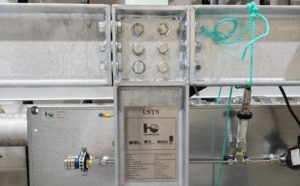
One of the main outcomes presented was the development and construction of the Small-Scale Transfer Skid (SSTS), a transportable reference system designed to provide traceability for flow-rate measurements in hydrogen and hydrogen-enriched natural gas (HENG). The system has been designed for pressures of up to 65 bar(a) and flow rates of up to 720 kg/h. It incorporates six parallel critical-flow Venturi nozzle lines, with two sets of sonic nozzles of different diameters.
Regarding the calibration of those nozzles in the SSTS, the first experimental campaign focused on Set A sonic nozzles, with a throat diameter of 1.6 mm. The tests covered flow rates from 1 to 20 kg/h and a target uncertainty of no more than 0.15% of mass flow rate. The initial results revealed a difference between the measured discharge coefficients and the values expected from ISO 9300:2002.
Following the calibration of the smaller Set A nozzles, Set B sonic nozzles, with a 4.4 mm throat diameter, have also been calibrated using the SSTS. This work enables the project to move towards the next stage of the calibration chain and the development of the Large-Scale Transfer Skid (LSTS).
H2FlowTrace is addressing one of the barriers to hydrogen uptake: the limited availability of traceable facilities and reliable accuracy data for flow measurement in hydrogen applications. By combining primary calibration facilities, transportable reference equipment, sonic nozzles and master meters, the project is building a measurement chain that can support research, calibration, certification and future deployment of flow meters for hydrogen and HENG.
The work presented at 𝗘𝗙𝗖𝗛₂ marks an important step in this process, with the first hydrogen calibrations completed and the transfer system now enabling the project to progress towards larger-scale measurements and laboratory intercomparison.