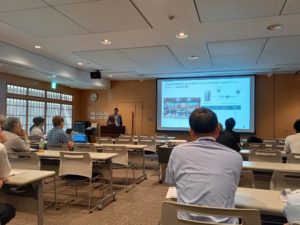

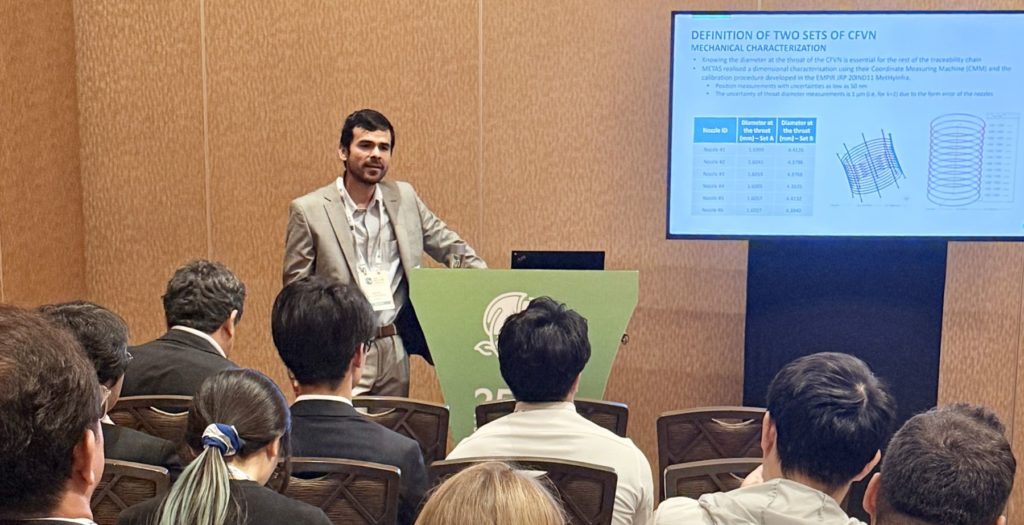
H2FlowTrace made it to the 25th World Hydrogen Energy Conference (WHEC 2026) held in Singapore. During the conference, the project showcased its progress towards establishing a metrological framework capable of providing direct SI traceability for hydrogen flow measurements in future transmission networks.
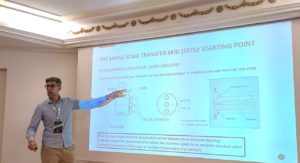
On 24 June, Miguel Ballesteros, Project Delivery Manager at GERG – European Gas Research Group presented the project’s approach to extending traceability from primary flow standards to the operating conditions encountered in large-scale hydrogen infrastructure. The presentation focused on the bootstrapping methodology, a key innovation developed within H2FlowTrace to enable the dissemination of SI traceability across several calibration levels while maintaining a rigorous evaluation of the associated measurement uncertainty. This methodology addresses one of the major metrological challenges for hydrogen transmission, namely the lack of direct calibration capabilities at the high flow rates required for industrial applications, by establishing a traceability chain that links primary standards with field-level measurements.
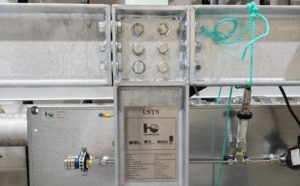
Another significant achievement presented at WHEC 2026 was the development of the project’s mobile transfer standards, which constitute the basis of the future calibration service being developed by the consortium. The small-scale transfer skid enables the transfer of SI traceability from primary calibration facilities to intermediate laboratories, while the large-scale transfer skid extends this traceability to industrial flow conditions representative of hydrogen transmission networks. Together, these systems provide the infrastructure required to perform traceable calibrations using both pure hydrogen and hydrogen-enriched natural gas under realistic operating conditions.
By integrating primary standards, transfer standards, uncertainty evaluation methodologies and field-deployable calibration procedures, H2FlowTrace is laying the foundations for a European calibration infrastructure capable of supporting reliable, accurate and traceable hydrogen flow measurements. The results presented at WHEC 2026 demonstrate the project’s contribution to overcoming one of the key metrological barriers to the safe, interoperable and economically robust deployment of hydrogen transmission networks across Europe.