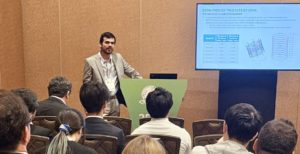

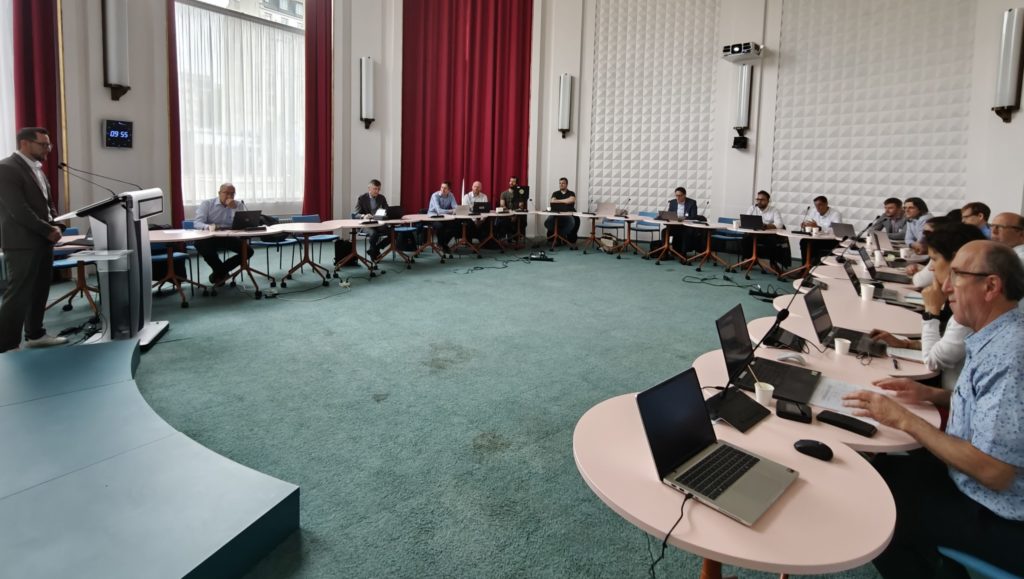
On April 29, the H2FlowTrace project held the workshop “Tracing Hydrogen, Tracing Progress: Mid-Project H2FlowTrace” at the headquarters of the French National Metrology and Testing Laboratory (LNE) in Paris. This event was part of a series of workshops of the European Metrology Network for Energy Gases, and it brought together experts from research, metrology institutes, and industry, who learned about the project’s progress and the challenges to be overcome in its second half to improve the traceability of pure hydrogen and hydrogen-natural gas (HENG) networks.
The session began with a presentation by Rémy Maury, CEO of Cesame-Exadébit, (LNE LADG) the project lead partner, who outlined the project’s main activities and the gaps. The presentation highlighted the contributions H2FlowTrace will make through a new traceability chain for hydrogen and HENG within the current gas grid network. Additionally, the project will develop guidelines for the calibration of the flow meters that are intended for use with hydrogen, HENG and alternative fluids, helping end users choose the best technology according to their applications.
The first technical presentation explained how the project is developing good practices for the calibration of flow meters to uptake the hydrogen use for domestic and industrial purposes. Marc MacDonald, Head of Hydrogen Metrology at TÜV SÜD (NEL), reported on the conclusions from the literature review on flow meter performance and calibration methods with H2 and HENG and outlined the initial results on industrial and domestic gas meter testing.
Then, Menne Schakel, Chief Scientist Flow at the Dutch National Metrological Institute (VSL), explained how the results of H2FlowTrace will enhance flow calibration in gas grids for an eventual European hydrogen backbone. To accomplish this, the project is developing the design and assembly of transfer skids to deliver traceability for hydrogen and hydrogen blends, establishing traceable calibration systems for hydrogen flow.
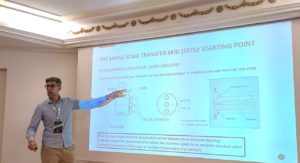
Following this last presentation, Marc de Huu, Head of Laboratory at the Swiss Federal Institute of Metrology (METAS), addressed how the project is using sonic nozzles under real conditions to upgrade the hydrogen traceability chain. The presentation focused on the milestones on this task, highlighting the calibration of 2 sets of nozzles used in a Small-Scale Transfer Skid (SSTS) to collect data for traceability of pure H2 up to 720 kg/h.
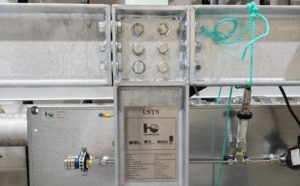
Afterwards, Hans Benjamin Böckler, Senior Researcher at German National Metrology Institute (PTB), took the floor to update the status of the pure hydrogen gas grid master meter calibration regarding higher gas flows. Thanks to the data obtained with the SSTS tests, the project will be able to establish data on hydrogen flows at higher rates with Large-Scale Transfer Skids (LSTS). It was explained how the LSTS will be assembled, and some details on how H2FlowTrace will carry out the testing through the LSTS.
The workshop concluded with a review of the project impact by Miguel Ballesteros, Programme Delivery Manager at the European Gas Research Group (GERG). The project’s participation in several high-level international events was highlighted, its current ties with more than 30 organisations in the stakeholder committee and the upcoming events where the project will be presented, such as the 20th International Flow Measurement Conference in Nara, Japan, or the 25th World Hydrogen Energy Conference in Singapore.